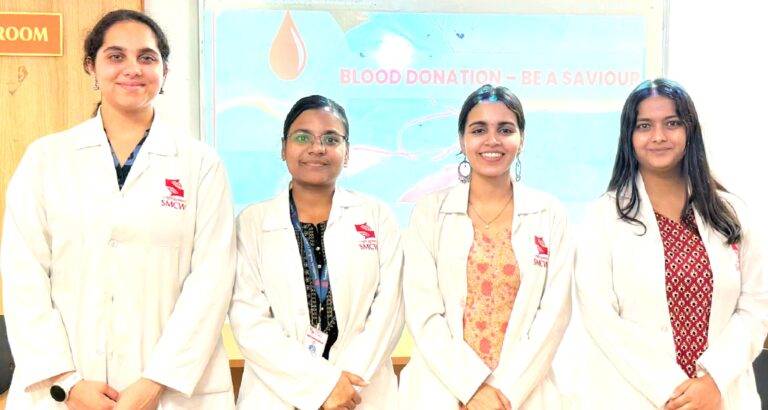

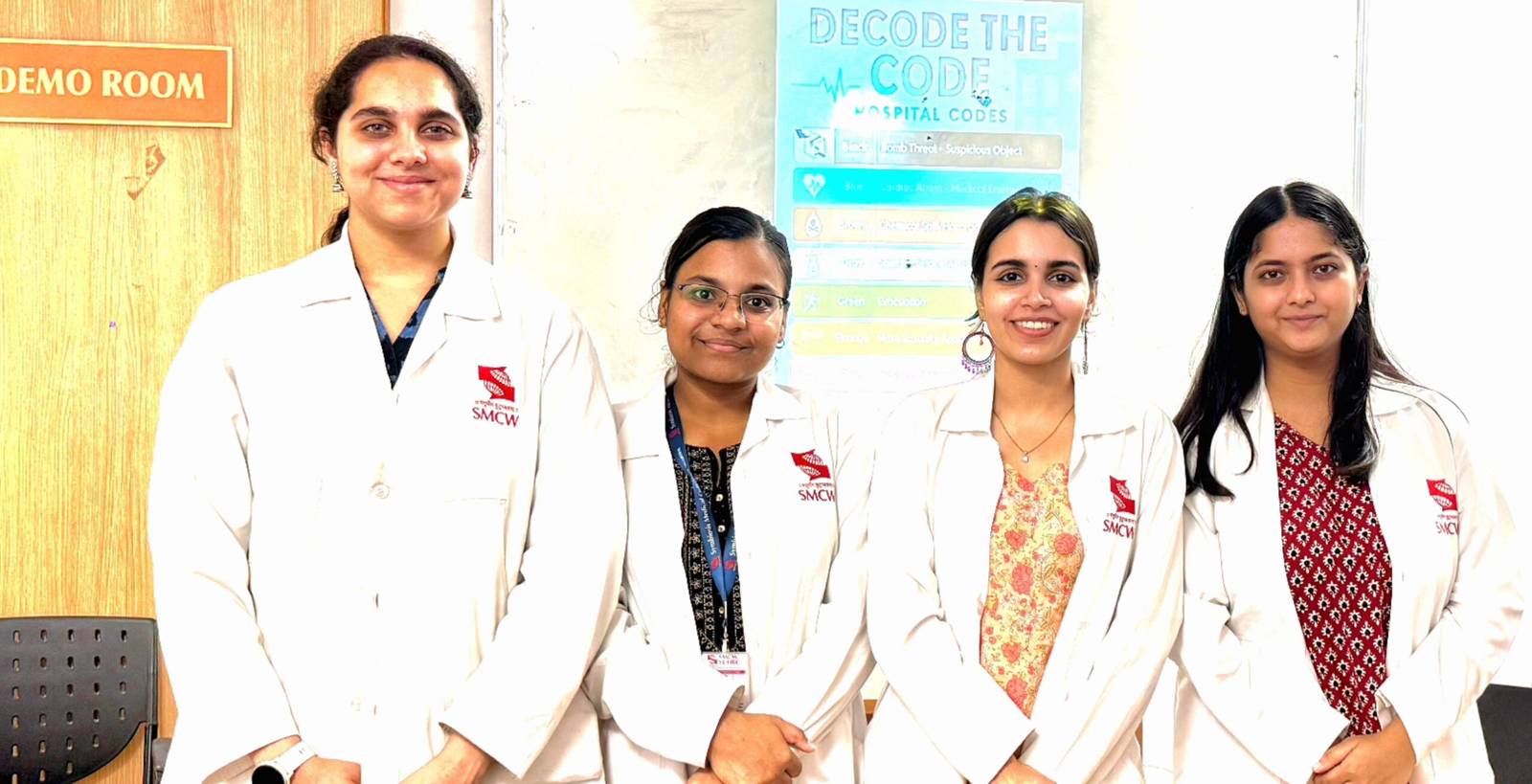

👩⚕️ Team – Aakansha Ringsia (Team Leader) , Priya Kulkarni, Nancy Sangwan, Srushti Choudhari
📍 Venue – Hospital Demonstration Room
📅 Dates –
- Theory Lecture: 24th July 2025
- Community / Practical Reinforcement: Within 1 week
📍 Organized by – Symbiosis Medical College for Women, Pune (SMCW)
🌸 Introduction
🎓 Awareness Today. Safety Tomorrow.
Hospitals rely on standardized emergency codes to ensure rapid, coordinated responses during critical situations—without creating panic. However, many medical students remain unfamiliar with these colour-coded alerts, leading to hesitation, confusion, and potential delays during emergencies.
Project ResQ was conceptualized to bridge this knowledge gap by simplifying emergency codes into clear, memorable actions. By combining structured teaching with interactive learning, the initiative aimed to foster confidence, preparedness, and a strong safety-first mindset among future healthcare professionals.
💡 The Need for Project ResQ
Medical students often face:
- Limited awareness of colour-coded hospital emergency protocols
- Difficulty recalling codes during high-stress situations
- Anxiety and hesitation during emergency responses
- By equipping students with clear understanding and recall strategies, Project ResQ seeks to transform uncertainty into preparedness—ensuring quicker, calmer, and more coordinated responses in real-time emergencies.
🎯 Objectives
✅ To assess baseline awareness of hospital emergency codes
✅ To simplify understanding and recall of code meanings and actions
✅ To improve preparedness, teamwork, and confidence during emergencies
🧠 Planning Phase
Theme Selected: Decode the Code – Every Second Counts
Key Preparations:
- Collection of official hospital emergency code protocols
- Designing posters, flashcards, handouts, and quiz materials
- Structuring a 30-minute interactive session for medical students
- Ensuring content clarity, relevance, and ease of recall
🔧 Execution Phase
📍 Location: Hospital Demonstration Room
👩⚕️ Participants: Medical Students
Activities Conducted:
📖 Lecture on the importance, meaning, and application of hospital emergency codes
❓ Interactive quiz to reinforce learning and improve recall
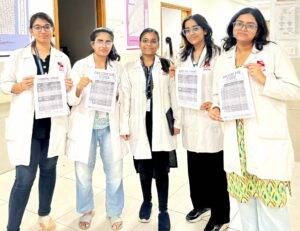
📝 Distribution of posters, flashcards, and handouts for continued reference
📊 Impact & Outcomes
📚 Academic Impact
- Improved understanding and recall of emergency codes
- Enhanced interactive learning and situational preparedness
- Strengthened confidence in responding to hospital emergencies
🌍 Social & Institutional Impact
- Promotion of a safety-first culture within the hospital environment
- Reduced anxiety and confusion during emergency situations
- Encouraged teamwork and coordinated response behavior
🌟 Challenges Faced
- Low baseline awareness of emergency codes among students
- Condensing extensive protocols into simple, memorable formats
- Managing content delivery within a limited session timeframe
- Despite these challenges, structured planning and interactive engagement ensured effective knowledge transfer.
🔮 Future Scope & Long-Term Vision
- Replication of the program for incoming MBBS batches
- Expansion to include nurses, paramedics, and other hospital staff
- Integration into regular hospital orientation and safety training programs
🏁 Conclusion
Project ResQ successfully addressed a critical yet often overlooked aspect of hospital safety—emergency code awareness. By transforming complex protocols into simple, actionable knowledge, the initiative enhanced preparedness, confidence, and teamwork among medical students. With strong potential for replication and expansion, Project ResQ stands as a sustainable model for promoting rapid, coordinated emergency responses—because in critical moments, awareness saves lives.