

Pregnancy and Childbirth Myths: Ritual Reset Awareness Campaign
Understanding Pregnancy and Childbirth Myths Through Community Learning
Pregnancy and childbirth myths continue to influence maternal and newborn health practices across many communities in India. While some traditions offer emotional support and cultural belonging, others may create barriers to safe and evidence-based healthcare.
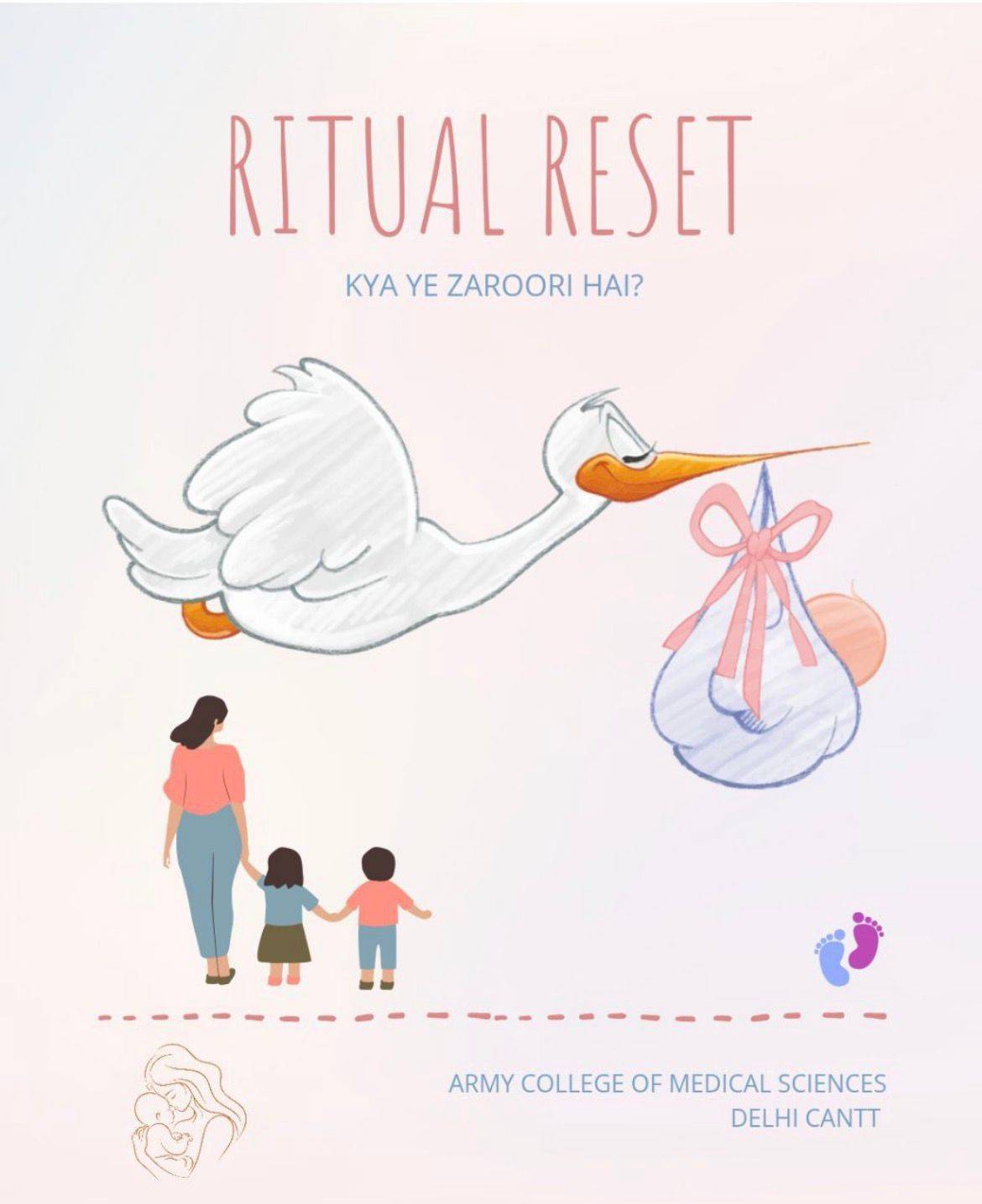
To explore this important issue, the Army College of Medical Sciences, New Delhi, in collaboration with NEST Foundation, launched Ritual Reset, an experiential learning and maternal health awareness initiative focused on identifying and addressing pregnancy and childbirth myths through research, field engagement, and community education.
The project created a bridge between traditional beliefs and modern medical understanding by encouraging respectful dialogue around maternal health, childbirth practices, and evidence-based care.
About Ritual Reset
Ritual Reset was designed as a student-led project to study pregnancy and childbirth myths in real community settings and develop meaningful educational interventions around them.
The initiative was conducted by the Departments of Obstetrics & Gynaecology and Microbiology at the Army College of Medical Sciences, New Delhi, with support from NEST Foundation.
Duration
Research Phase: July 1–25, 2025
Execution Phase: August 1–13, 2025
The project combined field research, interviews, observation, awareness sessions, and multimedia storytelling.
Objectives of the Pregnancy and Childbirth Myths Project
The primary goal of Ritual Reset was to better understand pregnancy and childbirth myths and their effect on maternal and newborn care.
The project focused on:
- Identifying myths in antenatal care (ANC), labour and childbirth, and postnatal care (PNC)
- Understanding how healthcare workers balance cultural beliefs with scientific practice
- Designing a targeted maternal health awareness intervention
- Promoting evidence-based pregnancy care through community education
Research Methodology
The research on pregnancy and childbirth myths was carried out across urban and peri-urban communities in Delhi including Tilak Nagar, Nangal, and nearby areas.
Data Collection Included:
- Semi-structured interviews with antenatal and postnatal women
- Interviews with obstetricians and gynecologists
- Conversations with ASHA workers, ANMs, and Anganwadi workers
- Field observations in homes, outpatient departments, and maternity settings
Collected myths were documented and reviewed against WHO recommendations and current medical guidelines.
Key Findings on Pregnancy and Childbirth Myths
The project revealed several commonly followed pregnancy and childbirth myths related to maternal and newborn care.
These included beliefs around:
- Food restrictions during pregnancy
- Activity limitations for pregnant women
- Traditional childbirth rituals
- Postpartum recovery restrictions
- Neonatal care customs passed through generations
A major finding was the persistent gap between medical recommendations and community practices due to cultural tradition, family influence, and misinformation.
Healthcare workers were aware of many of these myths but often faced practical challenges such as limited consultation time and heavy workload while counselling patients.
Community Awareness Campaign
Based on field findings, Ritual Reset developed a focused awareness campaign around pregnancy and childbirth myths using simple, community-friendly communication tools.
Activities included:
- Group discussions with women and families
- Visual educational material
- One-to-one counselling
- Awareness talks on safe maternal and newborn practices
The project encouraged respectful conversation instead of direct rejection of traditional beliefs, helping communities engage more openly with evidence-based healthcare information.
“Kya Ye Zaruri Hai” Documentary
As part of the project, the team created “Kya Ye Zaruri Hai”, a documentary focused on challenging common pregnancy and childbirth myths through real stories, field experiences, and medical perspectives.
The documentary became a reusable educational resource for awareness sessions and future maternal health outreach initiatives.
Watch here:
Kya Ye Zaruri Hai Documentary
Impact of Ritual Reset
Ritual Reset created academic, social, and community-level impact.
Project Outcomes
- Identified common myths affecting pregnancy and childbirth practices
- Promoted evidence-based maternal healthcare awareness
- Encouraged dialogue around harmful traditions and misinformation
- Created a reusable educational documentary
- Strengthened collaboration between students, healthcare workers, and communities
- Generated academic learning through case reflections and field experiences
The project also highlighted the importance of culturally sensitive communication in maternal health education.
Recommendations
Based on findings from Ritual Reset, the following steps are recommended:
- Include myth-busting discussions during routine ANC and PNC visits
- Develop multilingual maternal health education resources
- Use culturally tailored communication material for better engagement
- Strengthen community-healthcare collaboration through regular outreach programs
- Encourage continued research on pregnancy and childbirth myths in India
Conclusion
Pregnancy and childbirth myths remain an important public health issue that directly affects maternal and newborn wellbeing.
Ritual Reset demonstrated that structured community engagement, supported by research and multimedia education, can effectively address misinformation while respecting cultural context.
By bringing together medical students, healthcare professionals, and community workers, the project created meaningful dialogue around maternal health and evidence-based care.
Ritual Reset stands as an example of how education, empathy, and community collaboration can help reshape conversations around pregnancy, childbirth, and women’s health