
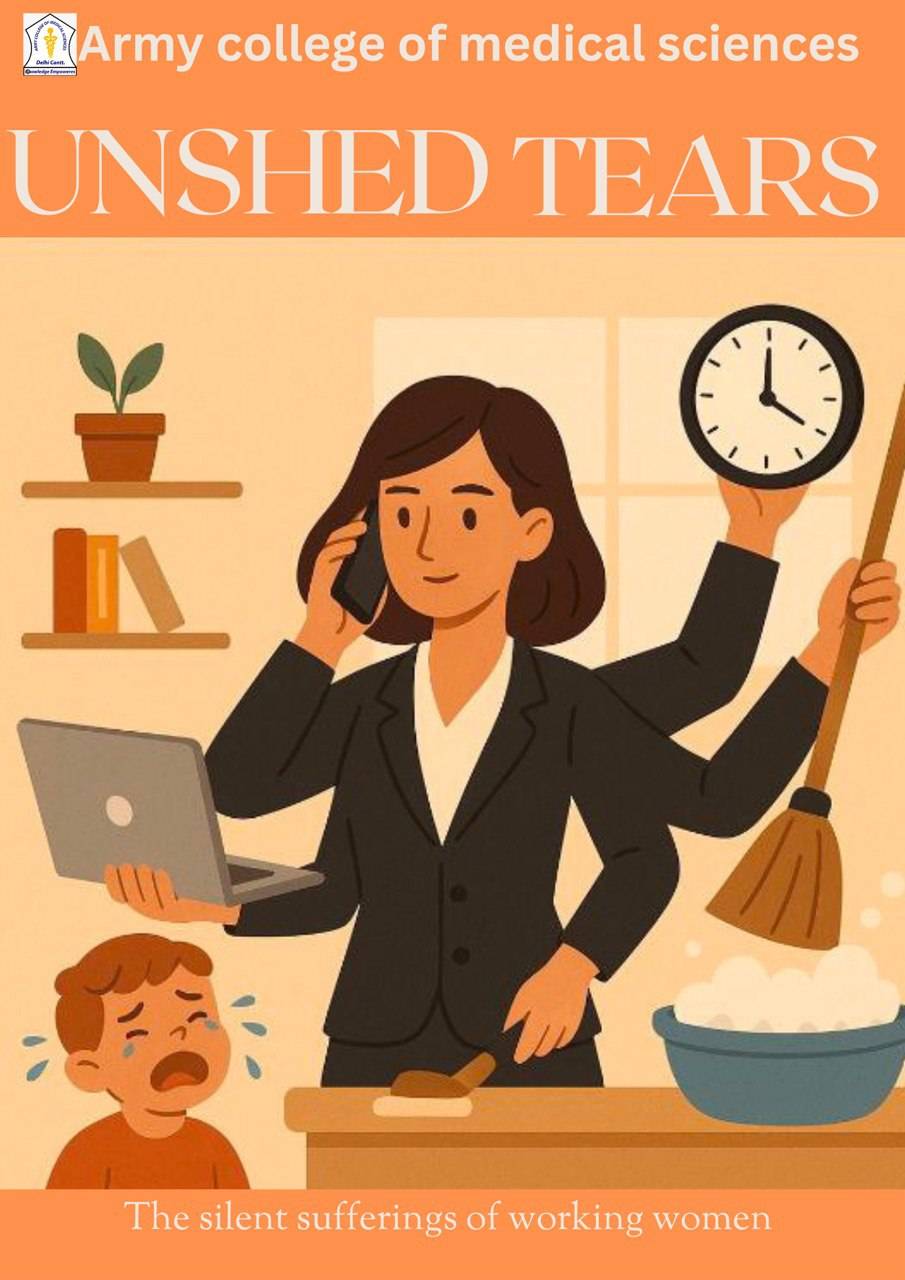

Challenges Faced by Working Women: Unshed Tears – Silent Sufferings of Working Women
Because Every Struggle Deserves a Voice
The challenges faced by working women often remain unseen, unheard, and unspoken despite being part of everyday life. From balancing work and family responsibilities to dealing with safety concerns, workplace discrimination, and emotional burnout, many women continue to navigate silent struggles with strength and resilience.
Unshed Tears – Silent Sufferings of Working Women was created as a community-based awareness initiative to understand and highlight the real-life challenges faced by working women across different professions and social settings.
This project became more than research—it became a journey of listening, learning, and giving voice to stories that deserve recognition.
About the Unshed Tears Project
Unshed Tears explored the emotional, physical, and social realities experienced by working women in different sectors including healthcare, education, offices, retail spaces, and informal workplaces.
The project focused on identifying the challenges faced by working women, documenting their lived experiences, and encouraging conversations around dignity, equality, safety, and support in the workplace.
Through surveys, field visits, interviews, awareness activities, and a short film, the project aimed to create empathy and inspire positive change.
Objectives of the Project
The main goal of Unshed Tears was to understand the challenges faced by working women and raise awareness through meaningful engagement.
The project objectives included:
- Recognising physical, emotional, and social challenges faced by working women
- Collecting qualitative and quantitative data across multiple sectors
- Raising awareness about gender equality and workplace dignity
- Encouraging empathy among family members and co-workers
- Inspiring recommendations for safer and more inclusive workplaces
Project Timeline
Planning Phase
July 1 – July 5, 2025
The team designed the project structure, identified key focus areas, and prepared survey questions.
Data Collection
A one-month survey was conducted using Google Forms, collecting responses from women across diverse professions and workplaces.
Field Visits
The team visited multiple locations and interacted directly with women to understand the challenges faced by working women through real conversations and observations.
Short Film Development
A cinematic awareness video was created portraying lived experiences of women related to workplace discrimination, harassment, work-life imbalance, mental stress, and safety.
Public Awareness Outreach
The team visited workplaces and public spaces to spread awareness, encourage conversations, and discuss practical solutions.
Key Findings: Challenges Faced by Working Women
The project highlighted several recurring challenges faced by working women.
Work-Life Imbalance
One of the most common concerns raised was difficulty balancing professional responsibilities with home, childcare, and self-care.
Many women expressed the need for:
- Flexible working hours
- Weekend offs
- Childcare leave
- Maternity support
- Daycare facilities at workplaces
Household Responsibilities and Gender Stereotypes
Many women reported carrying the majority of household responsibilities even while working full-time.
A common recommendation was stronger sharing of responsibilities within families and greater support from men in caregiving and domestic work.
Career Stagnation After Maternity Breaks
Several women shared concerns about slowed career growth after maternity leave or career breaks.
There was a strong need for workplaces to become more supportive and welcoming toward women returning after a gap.
Mental Health and Burnout
Emotional stress, exhaustion, and burnout emerged as major challenges faced by working women.
Participants highlighted the need for:
- Better workplace support
- Peaceful work environments
- Emotional wellbeing initiatives
- Job security and trust
Safety Concerns
Safety remained a major concern, especially during commuting, night shifts, and late working hours.
Women recommended:
- Safer transportation
- Better security measures
- Reliable workplace safety systems
Workplace Harassment and Gender Discrimination
Many participants openly discussed workplace harassment, unequal treatment, and gender discrimination.
The project reinforced the need for stronger awareness, policy implementation, and respectful workplace culture.
Lack of Family Support
Another important issue raised was lack of emotional support from family members.
Women expressed the importance of trust, encouragement, and being given the opportunity to prove their abilities without judgement.
Areas Covered During Field Visits
The project outreach was carried out across:
- Base Hospital, Delhi Cantonment
- ACMS hostel and college premises
- Sadar Bazaar
- Gopinath Bazaar
These visits allowed the team to hear experiences from women across multiple professions and social backgrounds.
Impact and Outcome
Unshed Tears created strong academic and social impact.
Academic Impact
- Improved communication skills
- Better planning and leadership ability
- Enhanced problem-solving and decision-making
- Learning in cinematography, storytelling, and video editing
Social Impact
- Increased awareness among co-workers and family members
- Valuable data collection for future research and interventions
- Encouraged conversations around women’s wellbeing at work
- Inspired small but meaningful positive changes within workplace environments
- Prepared young women to better understand future workplace realities and coping strategies
The project also helped build meaningful connections with hospital staff, faculty members, hostel workers, families, and members of the public.
Acknowledgement
Team Leader
Aishwarya
Team Members
Sachin Dahiya
Srishti Tripathi
Special Thanks
Ayush Jakhar
Ashish Sanwal
Sorabh
Anshul
R Aditya
Supervising Mentor
Dr. Vini Verma
Student Mentors
Rupal Goel
Haneen
Nikita Malik
Shreya Agarwal
Anisha Ahuja
Faculty In-Charge
Dr. Anuradha Makkar
Special thanks to Dr. Sumita Sethi for continued support and encouragement.
Conclusion
The challenges faced by working women are often invisible—but deeply real.
Unshed Tears created space for these stories to be heard with honesty, empathy, and dignity. By listening to lived experiences and engaging communities through research and awareness, the project opened important conversations around workplace equality, safety, mental wellbeing, and support.
It served as a reminder that behind every working woman is a story of effort, resilience, sacrifice, and strength.
To every woman fighting silent battles—your tears are seen, and your voice matters.