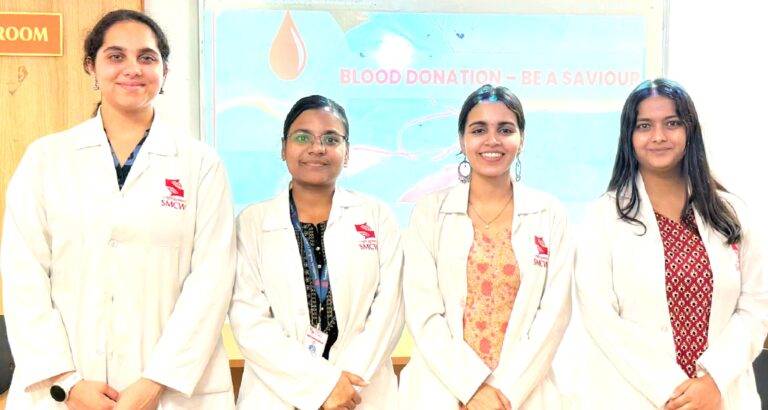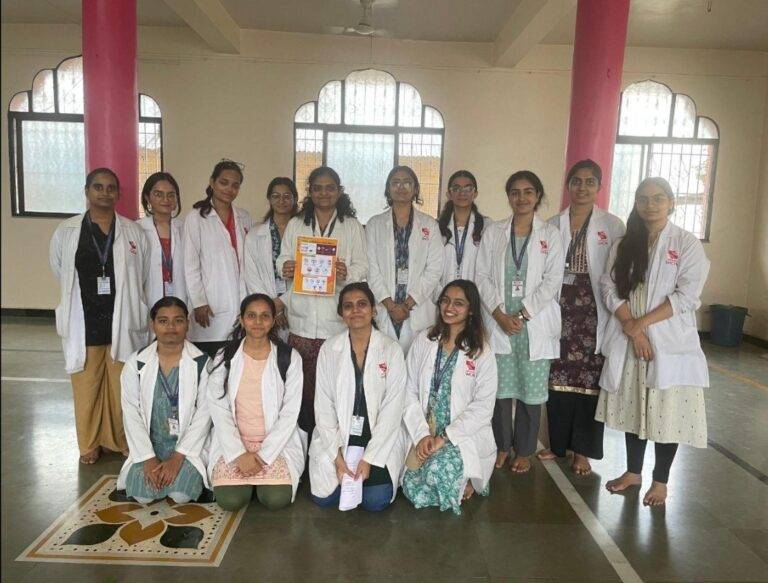



👩⚕️ Team – Rashmi (leader), SK Esha, Arpita Panchal, Kashish Tuteja, Kanupriya Verma, Anushka Saraswat, Aakansha Kaushik, Smriti Mishra, Shruti Sinha, Shreeya Srivastava, Navya Suresh
📅 Organised on – 11th August 2025
📍 Organised by – Students of Symbiosis Medical College for Women, Pune (SMCW)
🌸 Introduction
🎓 Measuring Health. Building Futures.
Anthropometry offers a non-invasive, cost-effective, and reliable method to evaluate nutritional status through body measurements. It enables early identification of undernutrition, overnutrition, and growth abnormalities—especially crucial among vulnerable populations such as orphaned children.
Project Sahaara was conceptualized to establish baseline nutritional health indicators among orphanage students and translate assessment findings into actionable awareness for caregivers. The initiative sought to bridge the gap between data collection and real-world dietary improvement, ensuring that assessment leads to impact.

💡 The Need for Project Sahaara
- Orphaned children are particularly vulnerable to:
- Nutritional deficiencies and growth delays
- Limited dietary diversity due to resource constraints
- Inadequate monitoring of growth and development
- This project addressed the need for structured nutritional surveillance and awareness programs, empowering caregivers with evidence-based strategies to support children’s physical and developmental health.
🎯 Objectives
✅ To assess nutritional status using anthropometric indicators (height, weight, MUAC, BMI, skinfold thickness) as per WHO standards
✅ To identify students requiring urgent nutritional intervention (e.g., severe acute malnutrition)
✅ To train caregivers in interpreting results and implementing dietary improvements
✅ To create sustainable materials for ongoing nutritional monitoring
🧠 Planning Phase
Theme Selected: Nutritional Assessment and Awareness for Orphanage Children
Participants:
- All orphanage students, stratified by age groups:
- < 5 years
- 5–19 years
Measurements Planned:
- Basic: Height (stadiometer), weight (digital scale), MUAC, BMI
- Advanced: Skinfold thickness (calipers) for body fat estimation
Indices & Standards:
- Height-for-age (stunting), weight-for-height (wasting), BMI-for-age using Z-scores/percentiles
- Composite score analysis to minimize misclassification
- Comparison with WHO 2006 reference standards
Quality Control:
- Standardized techniques by trained personnel
- Duplicate measurements to reduce error
Risk Prioritization:
- Severe acute malnutrition (MUAC <115 mm / bilateral pitting edema)
- Stunting (height-for-age Z-score < −2 SD)
- Composite score outliers
Additional Planning Components:
- Dashboard development for visualizing trends (growth charts, prevalence patterns)
Workshops for caregivers:
- Session 1: Interpretation of anthropometric reports
- Session 2: Practical guidance on nutrient-dense meals, portioning, and growth monitoring
Key Steps in Planning:
- Anthropometric assessment design
- Data analysis and reporting framework
- Staff awareness and nutrition toolkit development
🔧 Execution Phase
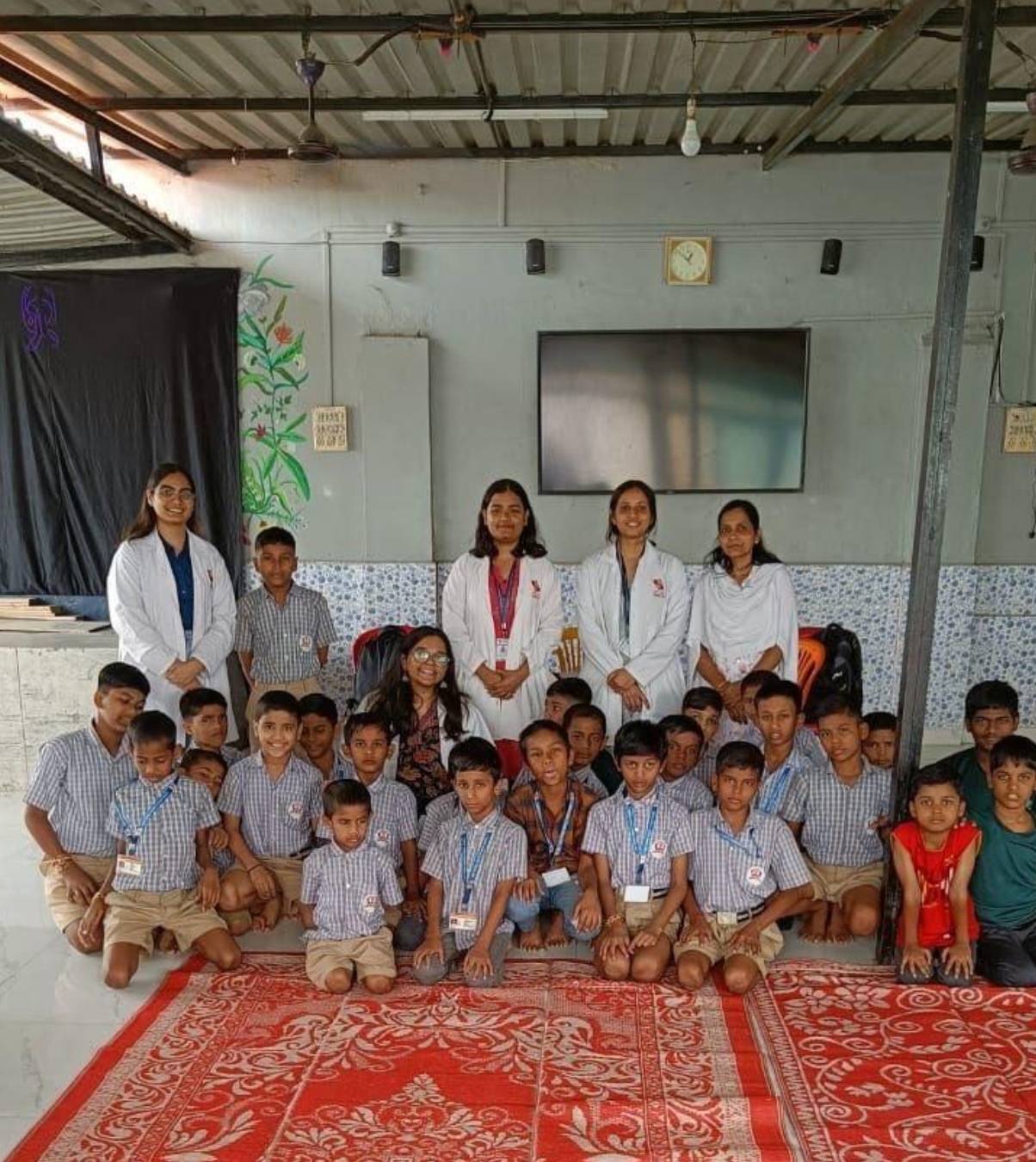
📍 Location: Orphanage premises
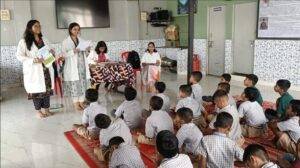
Activities Conducted:
- Display of colourful, child-friendly posters highlighting healthy eating, physical activity, and mental well-being
- Interactive games and activities to explain healthy habits in an engaging manner
- Anthropometric assessment of height, weight, BMI, MUAC, and skinfold thickness as per WHO guidelines
- Identification of children requiring immediate nutritional attention
- Training sessions for caregivers on interpreting results and implementing dietary improvements
📊 Impact & Measurable Outcomes
🎓 Academic & Skill Impact
- Practical application of nutritional assessment methods
- Improved communication and counselling skills
- Enhanced teamwork and field-based learning
🌍 Social & Health Impact
- Increased awareness among children regarding healthy eating and physical activity
- Identification and prioritization of at-risk children for intervention or referral
- Improved caregiver capacity to monitor growth and make nutrition-related decisions
- Promotion of responsibility and advocacy for healthy lifestyle practices
- Enhanced retention of messages through hands-on, playful learning approaches
🌟 Challenges Faced
- Limited infrastructure such as clean kitchens, food storage, and space for activities
- Budget constraints restricting access to diverse and nutrient-rich foods
- Incomplete medical and dietary histories of children
- Wide variability in age, health status, and literacy levels affecting standardization
- Despite these constraints, adaptive strategies and stakeholder cooperation enabled effective implementation.
🔮 Future Scope & Long-Term Vision
- Long-term reduction of malnutrition and developmental delays through sustained dietary support
- Training caregivers to embed best practices into daily routines
- Regular nutritional assessment and awareness drives
- Fostering a culture of community support, advocacy, and volunteer engagement
🙏 Acknowledgements
We sincerely thank:
- Dr. Sumita Ma’am and Priti Shah Ma’am for providing the opportunity to implement this project
- Our student mentor Sristi Garg for her guidance
- Our guide Dr. Sphurti Chate for constant support
- All team members whose cooperation and teamwork ensured the project’s success
🏁 Conclusion
Project Sahaara bridges critical gaps in nutritional surveillance among orphaned children by integrating rigorous anthropometric evaluation with targeted caregiver education. By leveraging WHO standards and composite scoring, the project ensures accurate risk identification while fostering sustainable monitoring practices. Its scalable design makes it a replicable model for institutional child-care settings—advancing early detection, prevention, and long-term nutritional well-being.