

Ritual Reset: Addressing Myths in Pregnancy & Childbirth
Introduction
Ritual Reset is an experiential learning and community outreach initiative focused on identifying and addressing myths related to pregnancy and childbirth. Conducted at Army College of Medical Sciences in collaboration with NEST Foundation, the project aimed to bridge the gap between cultural practices and evidence-based maternal healthcare.
Background & Rationale
Cultural beliefs and traditional practices significantly influence maternal and neonatal health behaviors. While some practices are harmless, others can delay care, restrict nutrition, or increase complications.
Despite established guidelines from global bodies such as World Health Organization, a gap persists between recommended care and real-world practices. Ritual Reset was designed to identify these gaps and address them through targeted community engagement.
Objectives
- To identify myths in antenatal, intrapartum, and postnatal care
- To understand the role of healthcare workers in addressing cultural practices
- To design and implement a focused awareness intervention
- To promote evidence-based maternal and neonatal healthcare
Methodology
Study Setting
Urban and peri-urban areas of Delhi, including Tilak Nagar and Nangal.
Data Collection
- Semi-structured interviews with antenatal and postnatal women
- Key informant interviews with obstetricians, ASHAs, ANMs, and AWWs
- Observational visits in OPDs, maternity wards, and households
Analysis
- Myths categorized into diet, activity, childbirth practices, and postpartum care
- Cross-referenced with standard medical and WHO guidelines
Intervention Strategy
- Community awareness sessions using visual aids and simplified counselling
- Group discussions addressing common myths
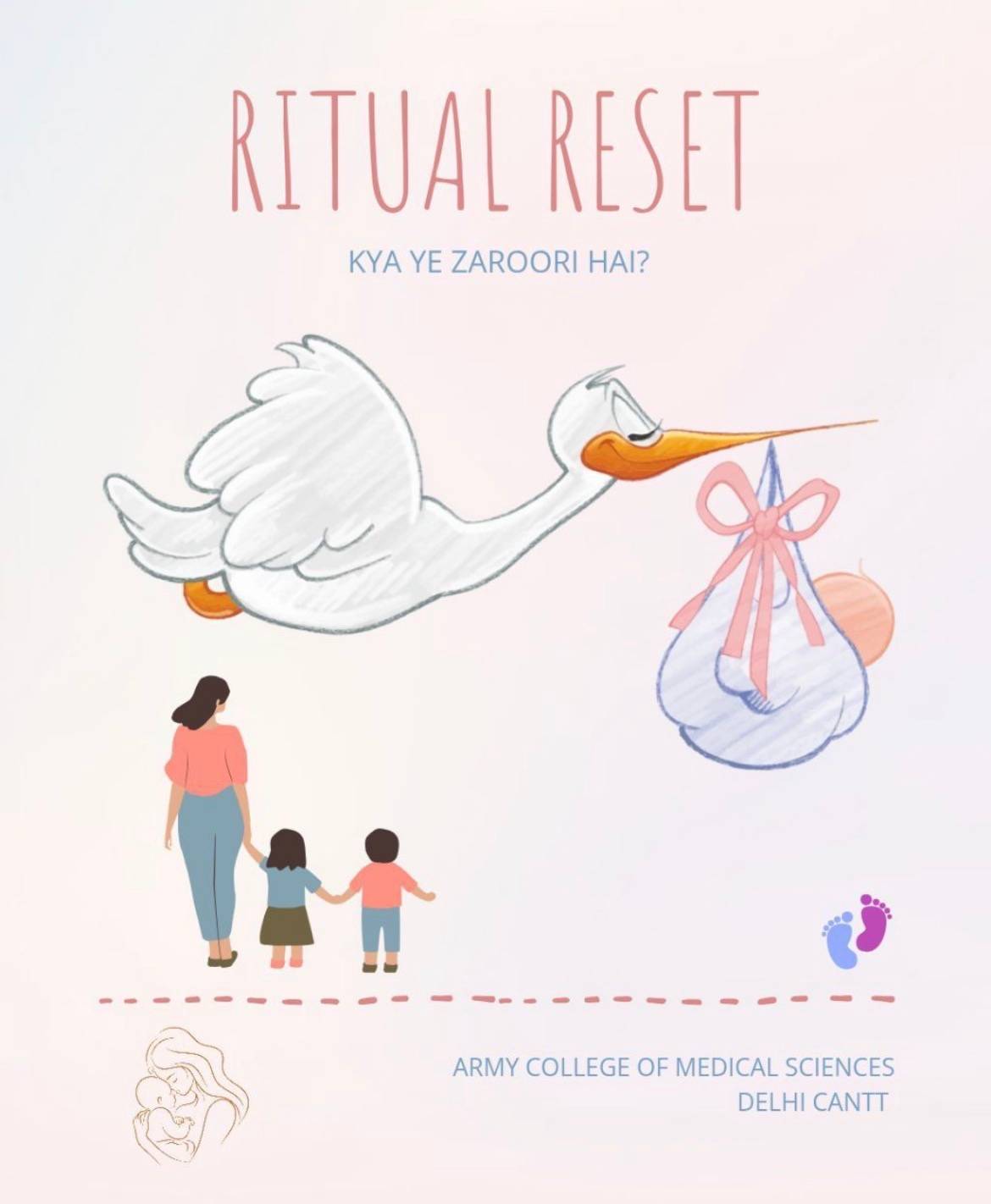
- Screening of the documentary “Kya Ye Zaruri Hai”
- Development of case-based learning material and reflective documentation
Key Activities
- Field-based myth identification and documentation
- Community engagement sessions
- Multimedia-based awareness using documentary screening
- Academic compilation of case series and reflections
Key Findings
- Widespread myths related to diet restrictions, physical activity, and neonatal care
- Strong influence of tradition overriding medical advice
- Healthcare workers aware of myths but limited by time and workload constraints
- Persistent gap between recommended guidelines and actual practices
Impact
- Development of a reusable educational documentary
- Increased community awareness of harmful practices
- Encouragement of evidence-based maternal care behaviors
- Creation of academic outputs from field experiences
Conclusion
Ritual Reset demonstrates that structured, culturally sensitive interventions can effectively address myths in pregnancy and childbirth. Integrating multimedia tools with community interaction enhances understanding and promotes behavioral change.
Recommendations
- Integrate myth-busting sessions into routine ANC and PNC visits
- Develop multilingual and culturally adapted educational materials
- Strengthen collaboration between healthcare providers and community workers
- Expand use of visual storytelling tools like documentaries
Project Team
Team Members:
Rupesh Vashistha, Ayush Tyagi, Devpriya Negi, Riya Raj, Ayush Jakhar
Faculty Mentors:
Dr. S. K. Gulati, Dr. Aditi Sangwan, Dr. Anuradha Makkar
Project Media
- Documentary: Kya Ye Zaruri Hai
- LinkedIn Coverage: (embed both links on site for authority + engagement)

Shivani P
Student Co-ordinator