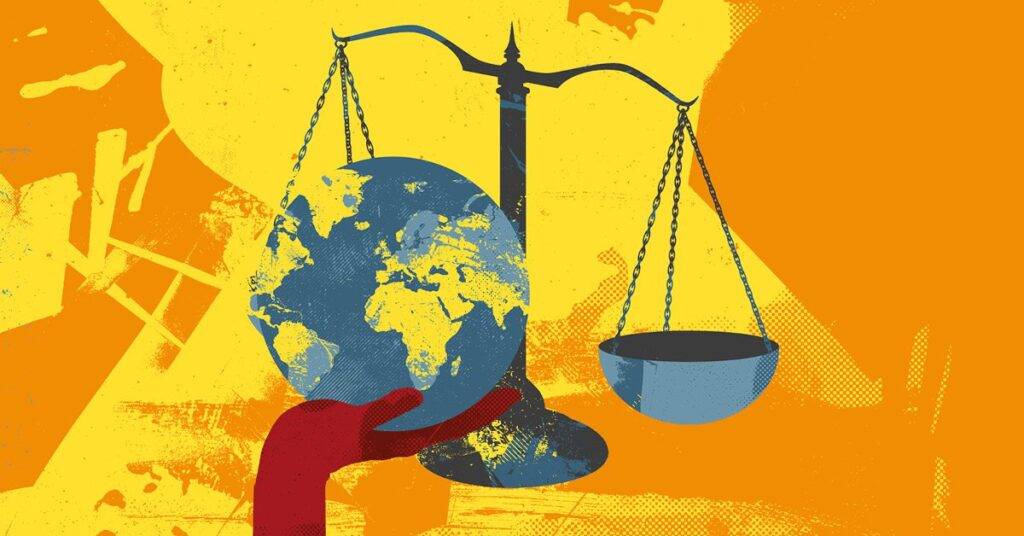


Climate justice is a framework that addresses the ethical, social, and political dimensions of climate change. It emphasizes the equitable distribution of the burdens and benefits of climate action, recognizing that vulnerable communities and nations—often the least responsible for greenhouse gas emissions—are disproportionately affected by climate impacts. Climate justice seeks to uphold human rights, ensure participatory decision-making, and promote fairness for both current and future generations.
Climate justice = Fairness in Climate action. Why Climate Justice Matters: 1.Protects the Most Vulnerable Climate impacts like floods, droughts, heatwaves, and storms disproportionately affect those with limited resources. Small island nations, marginalized rural communities, and urban slums often lack infrastructure and support to adapt. Climate justice ensures these groups are prioritized in climate policies. 2.Holds Major Polluters AccountableDifference between climate justice and climate action
| Aspect | Climate Justice | Climate Action |
|---|---|---|
| Definition | Focuses on fairness, equity, and human rights in addressing climate change. Ensures that those most affected are protected and polluters are held accountable. | Focuses on reducing greenhouse gas emissions, increasing renewable energy, and implementing policies to limit global warming. Primarily technical and policy-driven. |
| Main Goal | To achieve fairness in responsibility, impact, and access to climate solutions. | To limit or reverse climate change through mitigation and adaptation strategies. |
| Focus Areas | Vulnerable communities, human rights, intergenerational equity, participation, and accountability. | Emission reduction, renewable energy, carbon capture, sustainable transport, and adaptation infrastructure. |
| Ethical Dimension | Strong emphasis on ethics, equity, and social justice. | Primarily scientific, technological, and policy-oriented. |
| Beneficiaries | Marginalized and vulnerable populations, future generations. | Global population and the environment in general. |
| Examples | Climate finance for poor nations, Indigenous land rights, compensation for climate damage, eco-activism. | Installing solar panels, switching to electric vehicles, enforcing carbon taxes, building flood defenses. |
| Approach | Rights-based, participatory, and inclusive. | Technical, regulatory, and policy-focused. |
🌱 Deeper Dimensions of Climate Justice
1. Historical Responsibility
Industrialized nations and major polluters have contributed the largest share of greenhouse gas emissions over centuries. Climate justice recognizes that those who caused the problem bear greater responsibility to address it. Example: Small island nations like Tuvalu and the Maldives are facing rising sea levels despite contributing almost nothing to global emissions.2. Vulnerability and Inequality
Poorer communities often face the most severe climate impacts due to lack of resources, infrastructure, or adaptive capacity. Climate justice ensures these communities are prioritized in mitigation, adaptation, and recovery plans. Example: Farmers in sub-Saharan Africa experiencing recurrent droughts without access to irrigation or technology.3. Human Rights and Climate Justice
Climate change directly threatens basic human rights: access to food, water, health, housing, and safety. Policies guided by climate justice integrate human rights protections into environmental strategies. Example: Protecting coastal populations from forced displacement caused by extreme weather events.4. Intergenerational Justice
Decisions made today affect future generations, who will bear the long-term consequences of climate change. Climate justice ensures that resources and environmental quality are preserved for children and grandchildren. Example: Limiting deforestation and fossil fuel use to prevent irreversible ecological damage.5. Global South and Climate Finance
Developing nations often lack the financial and technological resources to adapt to climate change. Climate justice emphasizes international cooperation, funding, and technology transfer. Example: Loss and Damage Fund (COP27, 2022) – financial support from wealthy nations to help vulnerable countries recover from climate impacts.6. Recognition of Marginalized Communities
Marginalized groups, including Indigenous peoples, women, and low-income populations, often face systemic neglect in climate policies. Climate justice acknowledges their knowledge, needs, and rights. Example: Inclusion of Indigenous land management practices in forest conservation projects.7. Sustainability and Environmental Stewardship
Solutions should be environmentally sustainable, socially equitable, and economically viable. Example: Community-led renewable energy projects that reduce emissions while benefiting local economies.8. Accountability and Transparency
Governments, corporations, and institutions must be accountable for their climate impacts. Transparency ensures that climate commitments are measurable and enforced. Example: Public reporting of emissions and climate finance allocation. ✅ Summary: The deeper dimensions of climate justice show that climate change is not just an environmental issue—it is a matter of ethics, equity, human rights, and global responsibility. Effective climate action must integrate these dimensions to ensure fairness, sustainability, and protection for both vulnerable communities and Examples of climate justice issues-(http://Example of climate justice issues ) 1. Climate Refugees Millions of people are forced to leave their homes due to rising sea levels, floods, or droughts. Example: Residents of Bangladesh, Tuvalu, and the Maldives facing displacement due to coastal erosion and rising seas. — 2. Loss and Damage Compensation Developing countries demand financial support from wealthier nations for climate-related losses. Example: COP27 Loss and Damage Fund agreed to provide compensation for climate-affected nations. — 3. Environmental Racism Low-income or minority communities often live near polluting industries or hazardous sites. Example: African-American communities in Flint, Michigan facing contaminated water. Example: Indigenous communities in Canada and Australia exposed to mining and industrial pollution. — 4. Indigenous Rights Indigenous lands and resources are often exploited without consent, affecting their livelihoods. Example: Deforestation in the Amazon rainforest threatening Indigenous communities. Example: Pipeline construction over sacred Indigenous lands in the USA and Canada. — 5. Gender and Climate Justice Women are disproportionately affected by climate change due to social and economic inequalities. Example: Women farmers in sub-Saharan Africa struggle with drought and food insecurity. Programs supporting women in climate adaptation improve food security and resilience. — 6. Access to Clean Energy Poor and marginalized communities often lack access to renewable energy solutions. Example: Rural villages in India and Africa receiving solar micro-grid projects to reduce dependence on polluting fuels. — 7. Health Impacts Climate change exacerbates health inequities. Poor populations suffer the most. Example: Heatwaves in Europe or India disproportionately affecting the elderly and low-income communities. Example: Spread of vector-borne diseases like malaria in vulnerable regions. — 8. Fast Fashion and Exploitation The fashion industry disproportionately affects workers in developing countries while contributing heavily to emissions. Example: Textile factories in Bangladesh polluting water sources and exposing workers to unsafe conditions. — 9. Food and Water Security Climate impacts disrupt agriculture and water supplies for vulnerable communities. Example: Prolonged droughts in Horn of Africa causing famine. Example: Contamination of water sources in low-income urban areas due to flooding. — 10. Intergenerational Inequity Young people and future generations inherit the worst climate impacts without having caused them. Example: Global youth climate movements like Fridays for Future demanding climate accountability from governments.🌍 Why Climate Justice Is Important
1. Protects Vulnerable Communities
Climate change disproportionately affects low-income populations, Indigenous peoples, women, and children who contribute the least to greenhouse gas emissions. Example: Coastal communities in Bangladesh facing floods and rising sea levels.2. Ensures Fair Responsibility
Historical polluters, including wealthy nations and large corporations, must take greater responsibility for emissions. Example: Industrialized nations financing renewable energy and disaster relief in developing countries.3. Safeguards Human Rights
Climate change threatens fundamental rights: access to food, water, health, and shelter. Climate justice integrates human rights into climate policies. Example: Protecting communities from displacement caused by extreme weather events.4. Reduces Inequalities
Marginalized groups often face compounded challenges due to social, economic, or geographic disadvantages. Example: Women farmers in Africa receiving drought-resistant seeds and training programs.5. Protects Future Generations
Decisions made today affect children and future populations who will inherit the consequences of climate change. Example: Limiting deforestation and fossil fuel consumption to preserve ecosystems.6. Promotes Global Cooperation
Climate change is a global issue; no single country can solve it alone. Climate justice emphasizes international collaboration, funding, and technology transfer. Example: International climate agreements like the Paris Accord.7. Prevents Unintended Harm from Solutions
Some climate interventions, if poorly designed, can harm marginalized communities. Climate justice ensures solutions are ethical, fair, and socially responsible. Example: Avoiding large-scale dams that displace Indigenous populations. ✅ Summary: Climate justice is important because it ensures that climate action is fair, ethical, and inclusive. It protects vulnerable communities, holds major polluters accountable, reduces inequality, safeguards human rights, and secures a sustainable and livable planet for future generations.