


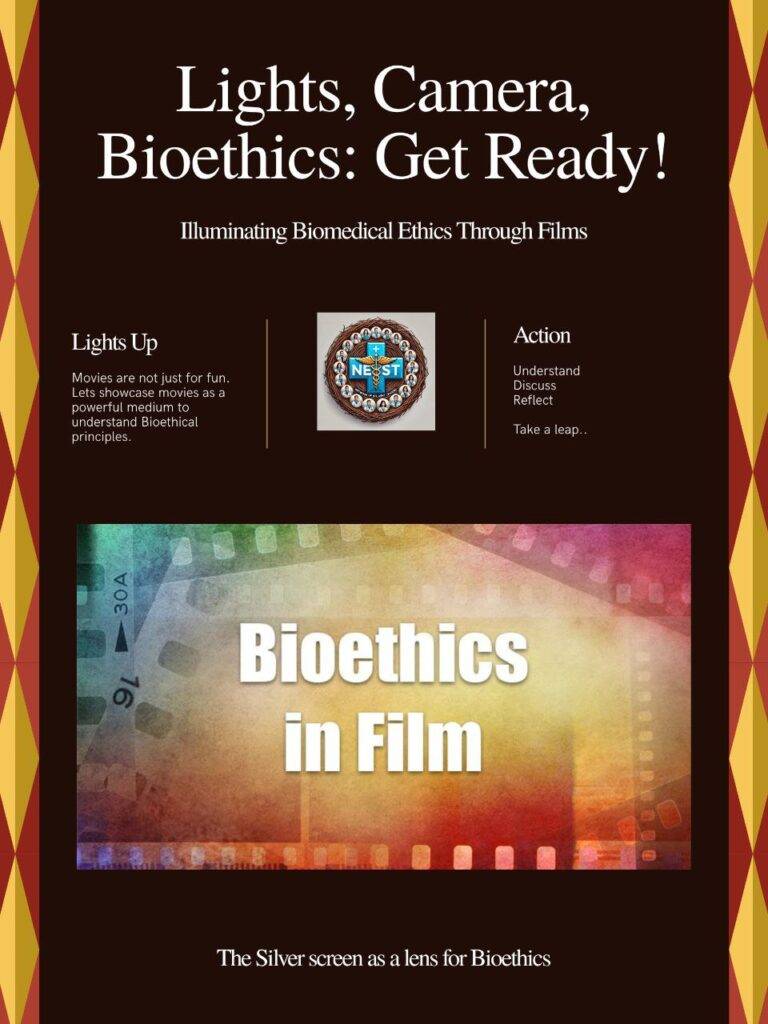
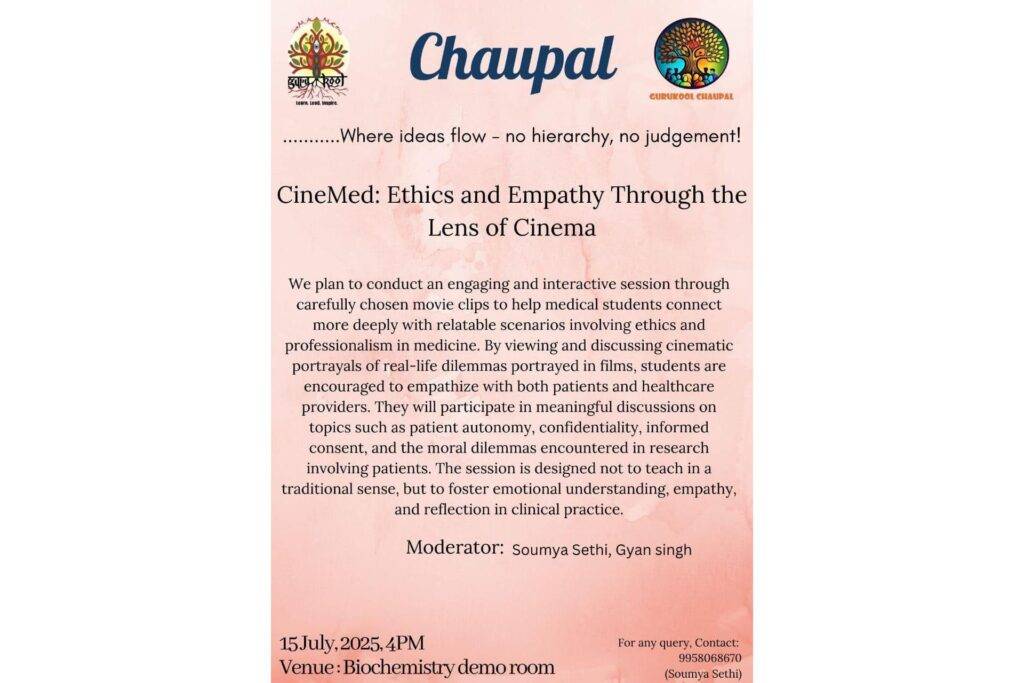
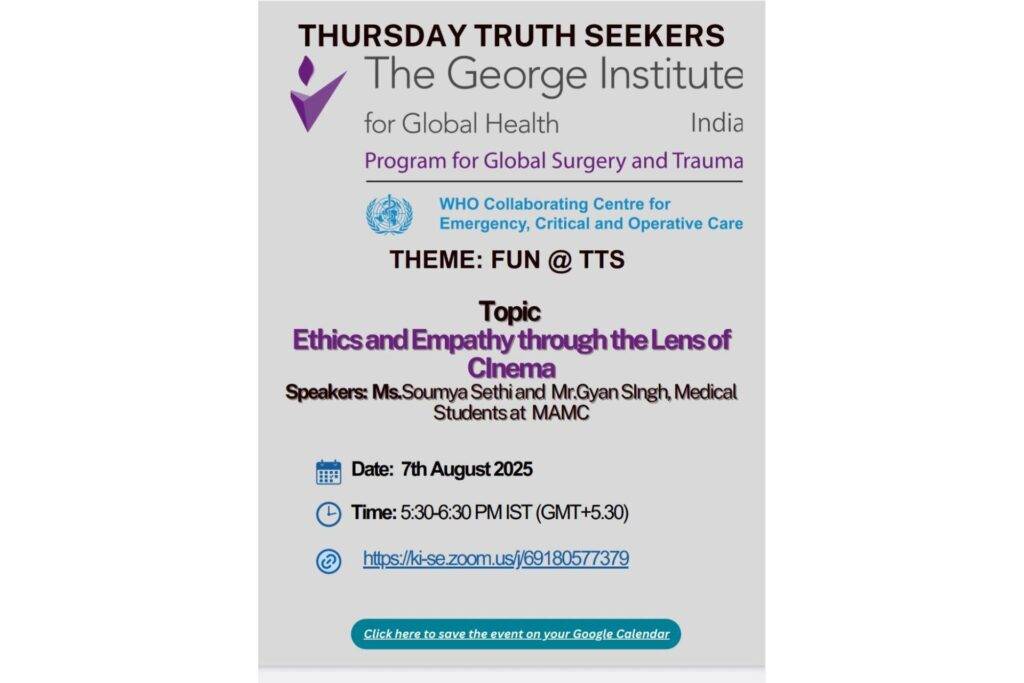
Students of Maulana Azad Medical College conducted an interactive session on “ETHICS AND EMPATHY THROUGH THE LENS OF CINEMA”.
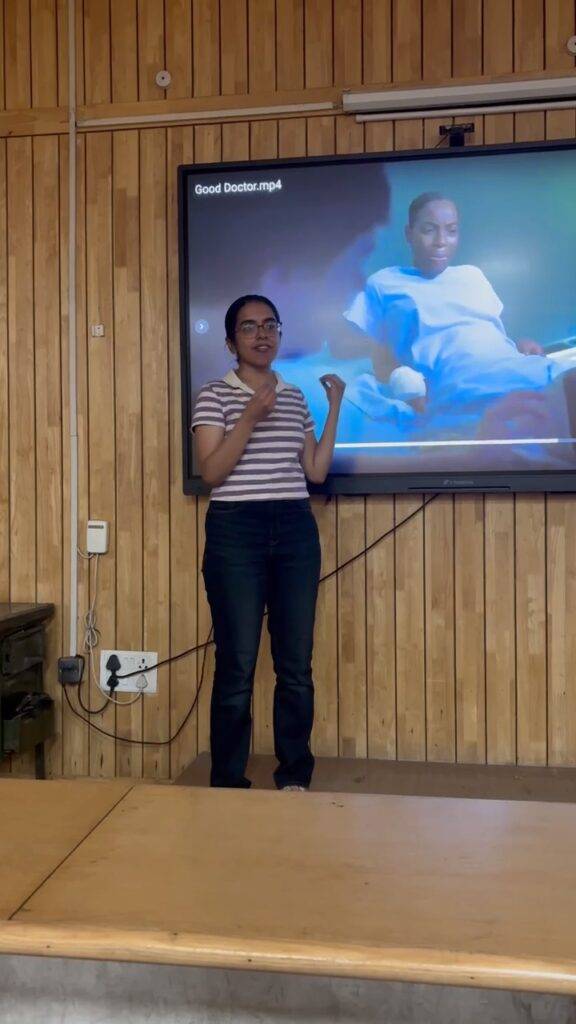
It was conducted under the aegis of gurokool and under the guidance of Dr. Anurag Mishra. It was attended by the students of 2022 batch. Five clips from movies and series were shown which were followed by interactive sessions.
𝗠𝗼𝘃𝗶𝗲 𝗰𝗹𝗶𝗽-𝟭: 𝗪𝗜𝗧
The movie Wit is the story of a brilliant English professor diagnosed with terminal ovarian cancer. The film explores her journey through illness, vulnerability, and self-discovery.
Points of discussion:
Patients are not merely subjects of study; they are human beings with rights, voices, and values.
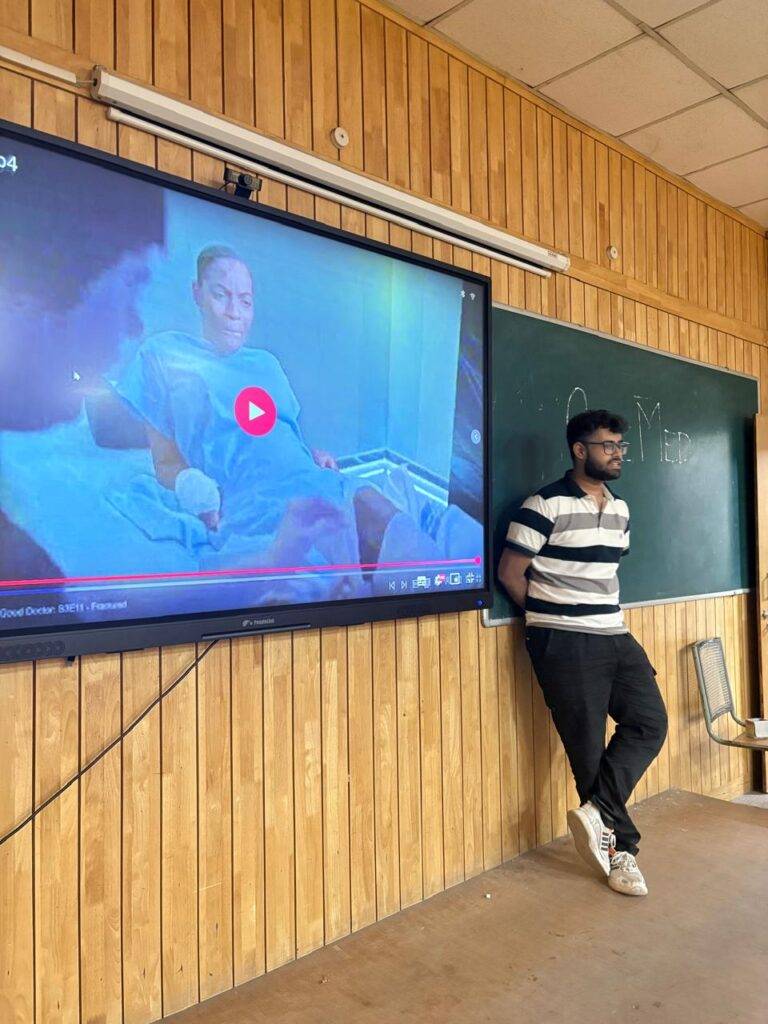
𝗠𝗼𝘃𝗶𝗲 𝗰𝗹𝗶𝗽-𝟮: 𝗧𝗵𝗲 𝗚𝗼𝗼𝗱 𝗗𝗼𝗰𝘁𝗼𝗿
A young woman, recovering from opioid addiction, is scheduled for complex surgery. When advised to undergo general anesthesia, she refuses due to fear of relapse.
Points of discussion:
Doctor–patient confidentiality is a fundamental ethical and legal obligation in medical practice.
𝗠𝗼𝘃𝗶𝗲 𝗰𝗹𝗶𝗽-𝟯: 𝗧𝗵𝗲 𝗚𝗿𝗲𝘆 𝗔𝗻𝗮𝘁𝗼𝗺𝘆
Interns are introduced to a structured approach for delivering bad news, known as the ‘Four L’s.’ As they begin role-playing, their delivery comes across as mechanical and emotionally distant.
Points of discussion:
Breaking bad news isn’t merely about following a protocol, but about truly acknowledging and honoring the emotional weight of the moment for the patient and their loved ones.
𝗠𝗼𝘃𝗶𝗲 𝗰𝗹𝗶𝗽-𝟰: 𝗠𝘆 𝘀𝗶𝘀𝘁𝗲𝗿’𝘀 𝗸𝗲𝗲𝗽𝗲𝗿
Anna Fitzgerald, conceived through in vitro fertilization, has undergone numerous medical procedures throughout her life to help her terminally ill sister, Kate. When Kate’s kidneys begin to fail, Anna is expected to donate one, despite the considerable risks to her health.
Points of discussion:
Patient autonomy , denotes an individual’s right to make informed, voluntary decisions regarding their own healthcare.
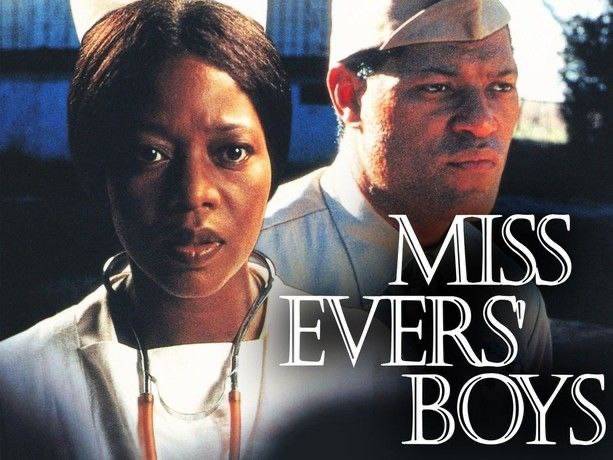
𝗠𝗼𝘃𝗶𝗲 𝗰𝗹𝗶𝗽-𝟱: 𝗠𝗶𝘀𝘀 𝗘𝘃𝗲𝗿’𝘀 𝗕𝗼𝘆𝘀
The movie is based on the infamous ‘Tuskegee Syphilis Study’, aimed to observe the natural progression of untreated syphilis in Black men. The participants were misled and never given proper treatment, even after Penicillin became the standard cure.



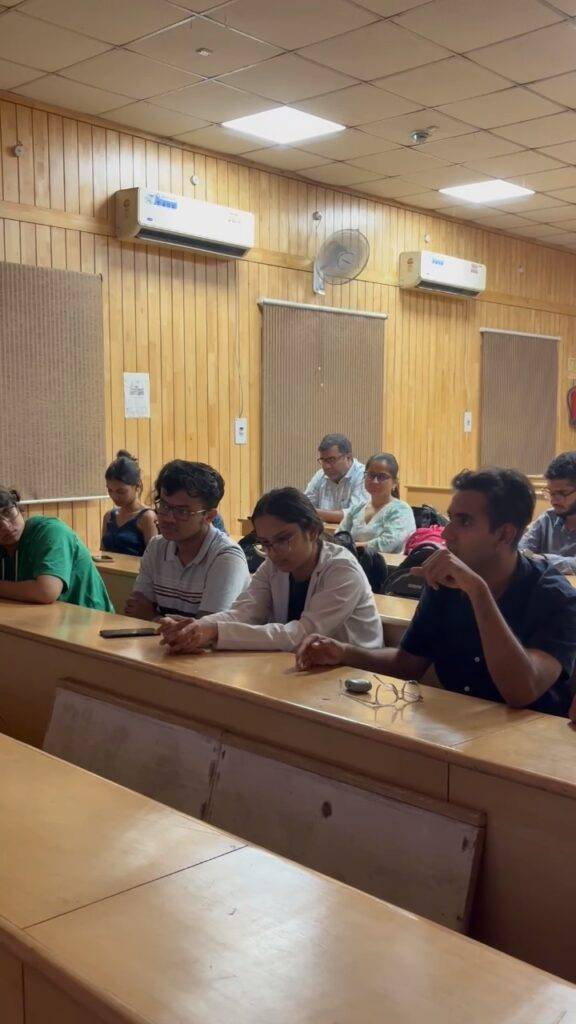
The session witnessed enthusiastic and thoughtful participation from the MBBS 2022 batch students. Following each cinematic clip, students actively engaged in the interactive discussions, sharing their interpretations, ethical dilemmas perceived in the narratives, and real-life parallels from clinical training. Many participants voiced nuanced opinions on patient autonomy, empathy, confidentiality, and professional responsibility, reflecting a growing ethical sensitivity. Role-play discussions, question-and-answer exchanges, and open forums encouraged students to critically analyze medical decision-making beyond textbook definitions. The diversity of viewpoints enriched the discourse and transformed the session into a collaborative learning experience, reinforcing the importance of reflective practice and humane professionalism in medicine.
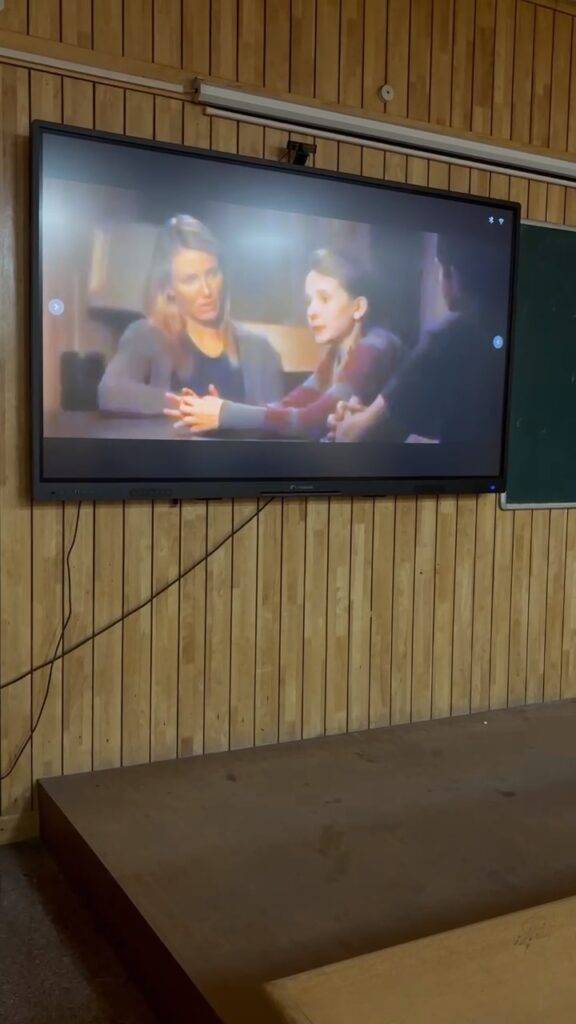
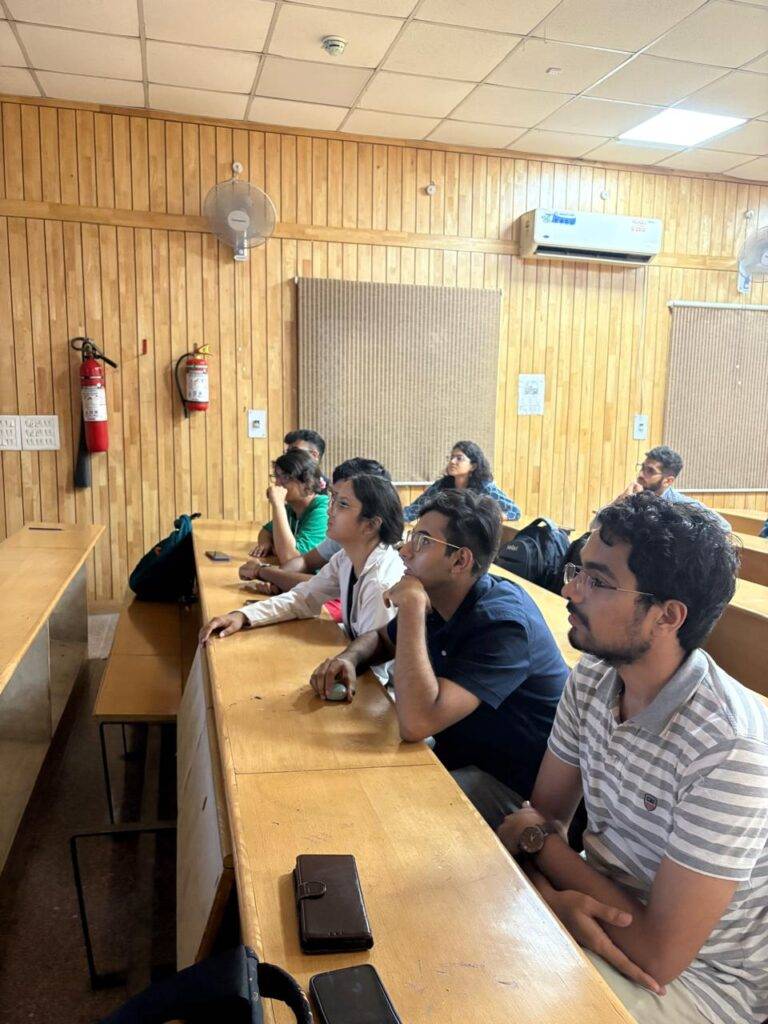
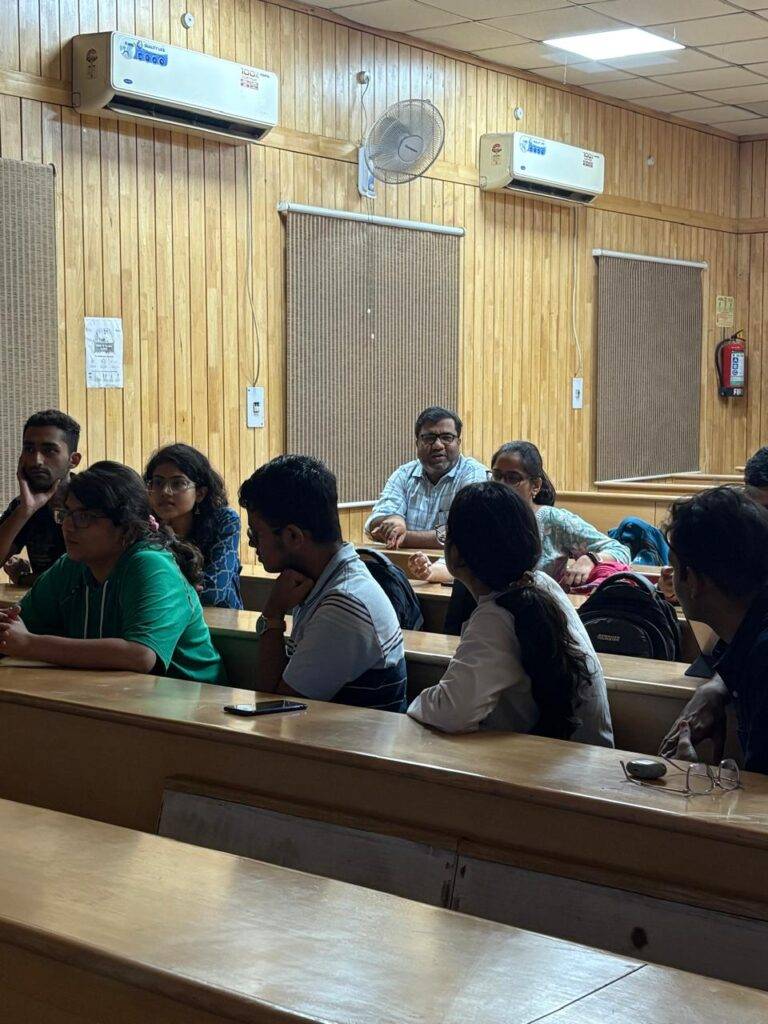
The project is planned to be sustainable, with provisions for conducting similar sessions at regular intervals. It is proposed that follow-up sessions will be organized every six months to ensure continuity of learning, reinforce ethical competencies, and foster ongoing reflection on professionalism among medical students.
The cinematic narratives collectively enabled students to develop a comprehensive understanding of medical ethics and professionalism by situating ethical principles within emotionally and clinically complex scenarios. Through Wit, students gained insight into the importance of empathy, dignity, and recognizing patients as individuals rather than mere clinical entities. The Good Doctor highlighted the ethical and legal significance of confidentiality, trust, and patient-centered decision-making. Grey’s Anatomy emphasized that effective communication—especially when delivering bad news—requires sensitivity and emotional intelligence beyond adherence to structured protocols. My Sister’s Keeper fostered critical reflection on patient autonomy, informed consent, and ethical dilemmas involving vulnerable populations and family pressures. Finally, Miss Evers’ Boys underscored the consequences of ethical misconduct in research, reinforcing the principles of informed consent, justice, and respect for human rights. Overall, the session strengthened students’ ability to critically analyze ethical dilemmas, reflect on professional responsibilities, and appreciate the essential role of compassion and ethical integrity in medical practice.
