



MODERN SLEEP DISORDERS: “ Why Midnight Is No Longer the Middle of the Night – Understanding Modern Sleep Patterns and Health Impacts”
SLEEP PATTERN
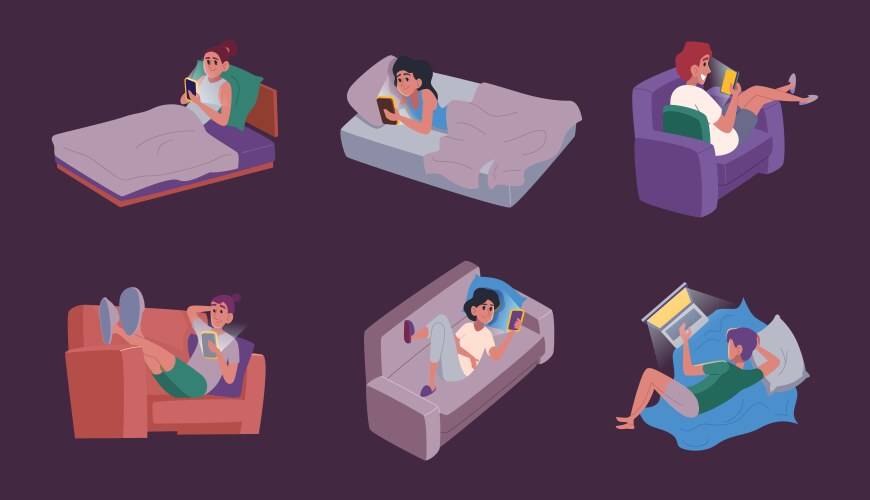
Ya ! no one going to say no about this because some how we all know that we do same thing instead sleep. 😴
In today’s fast-paced world, sleep has become the first thing we sacrifice, and the last thing we respect — yet it may be the most important pillar of our health.
Sleep is a reversible, physiologically regulated state of reduced consciousness and metabolic activity, characterized by diminished responsiveness to external stimuli and distinct neurophysiological stages, essential for neural restoration, cognitive processing, and homeostatic balance.”
Sleep occurs in repeating cycles of approximately 90–110 minutes, alternating between:
NREM Sleep:
Stage 1: Transition from wakefulness to light sleep.
Stage 2: Light sleep with reduced awareness of surroundings.
Stage 3 (Slow-Wave Sleep): Deep, restorative sleep with slow delta waves, critical for tissue growth and immune function.
REM Sleep:
Marked by vivid dreams, rapid eye movements, and brain activity patterns similar to wakefulness.
Plays a key role in memory consolidation, learning, and emotional stability.
SLEEP and Physical Health – Repair, Growth, and Immunity -:
1. Neurological & Cognitive
Memory Processing: Converts new experiences into long-term memories.
Learning Optimization: Improves skill acquisition, problem-solving, and creativity.
Neurotoxin Clearance: Removes waste products like β-amyloid and tau proteins from the brain via the glymphatic system.
Neural Plasticity: Strengthens useful neural connections and eliminates weak ones for efficient brain function.
2. Physical Recovery & Maintenance
Cellular Repair: Restores damaged cells and tissues, accelerates wound healing.
Muscle Growth: Releases growth hormone (GH), especially in slow-wave sleep.
Energy Replenishment: Restores glycogen and ATP levels in muscles and brain.
Organ Health: Supports optimal functioning of the heart, kidneys, and endocrine system.
3. Emotional & Psychological Health
Mood Stabilization: Helps regulate neurotransmitters like serotonin and dopamine.
Stress Control: Reduces cortisol levels, lowering mental and physical stress.
Emotional Processing: REM sleep integrates emotional experiences, reducing anxiety and trauma impact.
4. Immune & Inflammatory Response
Immune Strengthening: Increases production of immune cells and antibodies.
Infection Defense: Enhances the body’s ability to fight pathogens.
Inflammation Control: Prevents chronic inflammation by regulating cytokine release.
5. Metabolic & Hormonal Regulation
Appetite Control: Maintains healthy leptin (satiety) and ghrelin (hunger) balance.
Glucose Control: Improves insulin sensitivity and prevents hyperglycemia.
Endocrine Balance: Regulates hormones like melatonin, thyroid hormones, and cortisol.
6. Cardiovascular & Respiratory Health
Blood Pressure Regulation: Reduces nocturnal hypertension.
Heart Health: Improves heart rate variability and reduces strain on the cardiovascular system.
Respiratory Support: Coordinates breathing patterns for oxygen balance.
7. Development & Growth (Especially in Children)
Stimulates growth hormone release for normal development.
Supports brain maturation and learning capacity in infants and young children.
8. Survival & Evolutionary Role
Conserves energy when physical activity would be inefficient or dangerous.
Keeps organisms safe during dark or risky periods by promoting inactivity.
“SLEEP: Contemporary sleep patterns have undergone significant deviations from those observed in earlier times.”
Modern-Day Shifts in Sleep Patterns
1. Industrialized Societies: Longer but Misaligned Sleep
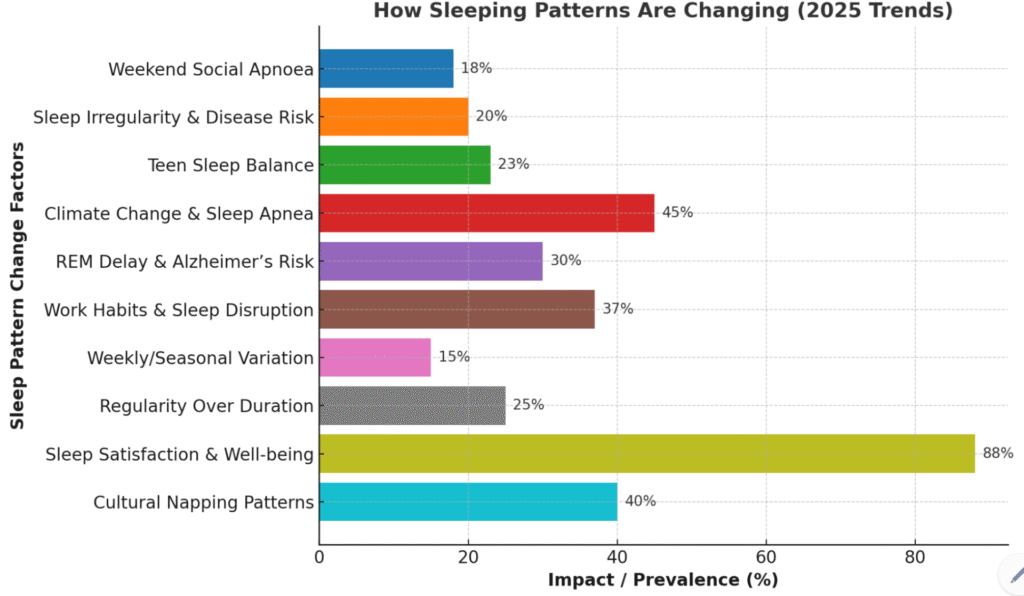
People in industrialized nations now enjoy about 45 minutes more sleep per night compared to those in non-industrialized settings, along with 14% higher sleep efficiency—likely due to factors like cozy bedding and climate-controlled environments. However, this comes at a cost: artificial lighting and modern schedules can significantly disrupt our natural circadian rhythms .
Many are sleeping more efficiently, yet still feel tired or out-of-sync because their internal clocks are being thrown off by technology, lighting, and irregular timing .
2. Weekend “Social Apnoea” & Sleep Irregularity
Recent research identified a new phenomenon: “social apnoea”—a spike in the severity of obstructive sleep apnea on weekends. Weekend behaviors like drinking, smoking, inconsistent sleep schedules, and skipping medical devices (e.g., CPAP machines) contribute to an 18% increase in moderate to severe OSA on Saturdays compared to midweek .
Also, over half of people fall into suboptimal sleep patterns—ranging from chronic insomnia to weekend “catch-up” sleep or daytime napping—and these patterns are notoriously hard to change over time .
3. Tech, Screen Time & Social Jetlag
Technology—especially blue light from screens—suppresses melatonin and pushes bedtimes later. Combined with early-morning obligations, this leads to social jetlag—a misalignment between internal clock and society. Over 70% of people experience at least one hour of social jetlag per week .
4. Heat, Climate, and Sleep Disruption
Rising nighttime temperatures due to climate change are delaying sleep onset and shortening sleep duration. This issue disproportionately impacts older adults, women, and populations in lower-income regions .
5. Pandemic’s Lingering Impact
During COVID-19 lockdowns, people slept longer but saw a delay in sleep timing and greater variability—especially working adults. Occupations like academic staff experienced more inconsistent sleep compared to others .
6. Adolescents at Risk: Poor, Shifting Sleep
Teenagers often suffer from delayed circadian rhythms—biologically driven to fall asleep and wake later. Coupled with early school start times and tech use, this causes shorter, lower-quality sleep, adversely affecting mental health and performance .
7. Chronodisruption: The Consequences of Rhythm Disruption
The term “chronodisruption” captures what happens when modern lifestyle elements—like artificial light, shift work, and irregular schedules—disturb natural body rhythms. This is linked to increased risks of mood disorders, cardiovascular disease, metabolic issues, and cancer .
SLEEP and Health Implications of Altered Sleep Patterns-:
| Condition | Underlying Pathophysiological Mechanism | Clinical Manifestations |
|---|---|---|
| Metabolic Dysregulation | Disruption of circadian homeostasis impairs insulin sensitivity, alters glucose metabolism, and modulates appetite-regulating hormones (leptin, ghrelin). | Central obesity, atherogenic dyslipidemia, type 2 diabetes mellitus. |
| Cardiovascular Morbidity | Persistent sleep curtailment and circadian misalignment enhance sympathetic activity, elevate cortisol secretion, and promote systemic inflammation. | Hypertension, atherosclerosis, ischemic stroke. |
| Neurocognitive Decline | Attenuation of slow-wave and REM phases disrupts synaptic plasticity and reduces clearance of neurotoxic metabolites (e.g., β-amyloid). | Memory deficits, executive dysfunction, increased Alzheimer’s risk. |
| Immunological Suppression | Reduced sleep duration decreases NK cell activity, impairs T-lymphocyte proliferation, and alters cytokine signaling. | Higher infection susceptibility, reduced vaccine efficacy, delayed wound healing. |
| Endocrine & Hormonal Imbalance | Altered sleep-wake architecture dysregulates melatonin, cortisol, growth hormone, and gonadotropin release. | Tissue repair deficits, reproductive hormone disturbances, maladaptive stress responses. |
| Psychiatric Sequelae | Sleep irregularity perturbs serotonergic and dopaminergic neurotransmission. | Depression, anxiety, mood instability. |
| Diminished Physical Performance | Reduced sleep impairs muscle protein synthesis, glycogen replenishment, and neuromuscular coordination. | Decreased endurance, delayed recovery, increased injury risk. |
Sleep Pattern Changes Across Age Groups
1. Newborns (0–3 months)Sleep is polyphasic (multiple short periods, day and night).Irregular circadian rhythm; no clear distinction between day and night.Frequent waking for feeding every 2–4 hours.
2. Infants (4–11 months)Sleep becomes more consolidated at night.Naps decrease gradually from 3–4 to about 2 per day.Developing circadian rhythm aligned with light–dark cycle.
3. Toddlers (1–2 years)Sleep shifts toward one main nighttime sleep with 1–2 daytime naps.More resistance at bedtime (“bedtime struggles”) due to growing independence.
4. Preschoolers (3–5 years)Usually one long nighttime sleep with a single daytime nap (or naps fade by age 5).Common issues: nightmares or night terrors.More predictable sleep–wake schedule.
5. School-age Children (6–13 years)Sleep becomes monophasic (mainly at night).Bedtime often shifts later due to school, activities, and exposure to screens.Need more sleep than they often get.
6. Teenagers (14–17 years)Natural circadian rhythm shifts to delayed sleep phase → tendency to sleep late and wake late (“night owl” pattern).Academic and social demands lead to chronic sleep deprivation.Irregular sleep schedules (weekday vs. weekend sleep).
7. Young Adults (18–25 years)Sleep need stabilizes at 7–9 hours, but patterns are often irregular.Social life, work, and technology use lead to late-night habits.Common: insomnia, all-nighters, or inconsistent sleep.
8. Adults (26–64 years)Sleep usually consolidated at night, but quality may decrease due to stress, work, and family responsibilities.Shorter sleep duration common due to lifestyle.Disorders like insomnia or sleep apnea may emerge.
9. Older Adults (65+ years)Total sleep time decreases slightly.Sleep becomes lighter with more frequent awakenings.
Restful sleep doesn’t happen by accident—it happens when we consciously change our habits.Adjusting your bedtime, reducing screens, and creating a calm environment can transform your nights.Irregular sleep drains energy, focus, and overall well-being, keeping you stuck in a cycle of fatigue.
Guidelines for Modifying Sleep Patterns:
1. Establish a Consistent Sleep ScheduleDetermine an optimal bedtime and wake-up time that ensures 7–9 hours of restorative sleep.Maintain this schedule consistently, including weekends, to support the circadian rhythm and enhance sleep quality.
2. Implement Gradual AdjustmentsAdjust sleep and wake times incrementally by 15–30 minutes per day to minimize circadian disruption.Gradual modification reduces the risk of sleep deprivation and facilitates long-term adherence.
3. Optimize the Sleep EnvironmentEnsure the bedroom is dark, quiet, and cool.Reduce exposure to artificial light and electronic devices at least one hour before bedtime.Utilize comfortable bedding and remove environmental distractions to promote uninterrupted sleep.
4. Manage Light ExposureObtain morning sunlight to reinforce circadian alignment and alertness.Minimize evening exposure to blue light from screens to support natural melatonin production and facilitate sleep onset.
5. Modify Lifestyle and Behavioral FactorsAvoid caffeine, nicotine, and alcohol 4–6 hours before bedtime.Limit heavy meals prior to sleep.Engage in regular physical activity, while avoiding vigorous exercise immediately before bedtime.
6. Incorporate Pre-Sleep Relaxation TechniquesUtilize strategies such as meditation, deep breathing exercises, reading, or warm showers to facilitate physiological and psychological relaxation prior to sleep.
7. Monitor Progress and Adjust AccordinglyMaintain a sleep diary documenting bedtime, wake time, naps, and perceived sleep quality.Regular monitoring allows for assessment of progress and timely modification of interventions. Adaptation to new sleep patterns typically requires 1–3 weeks
“Sleep is the foundation of health; prioritize it, protect it, and let it guide you to peak performance.”
https://www.who.int/news-room/fact-sheets/detail/sleep-and-health