

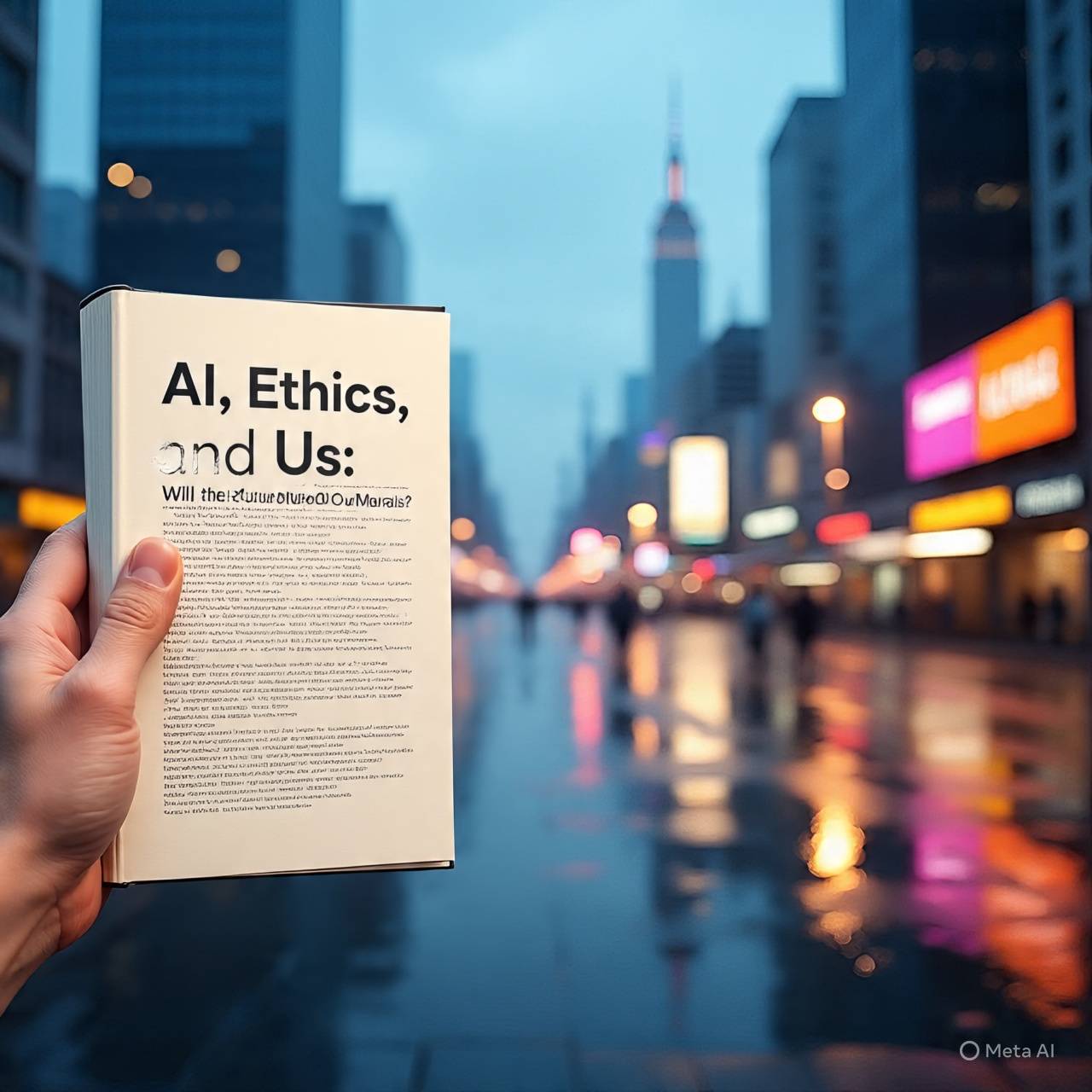

Ai Ethics and Us — Imagine a world where machines make life-saving decisions, write laws, or decide who gets hired — without a heartbeat, conscience, or a sense of right and wrong. As artificial intelligence rapidly integrates into every aspect of our lives, a question arises: In a future ruled by logic and algorithms, will human morality still matter? Or will we outsource our ethics to code?
AI systems are trained on data, not on empathy. They follow patterns, not principles. While they can mimic human behavior, they don’t possess a conscience or an internal moral compass. This raises a critical concern: when AI systems make decisions, whose values are they really reflecting? And what happens when those values are flawed, biased, or incomplete?

Many people assume technology is neutral, but in reality, algorithms are reflections of their creators — shaped by the data they’re fed and the priorities they’re programmed with. If we embed AI into systems of justice, healthcare, hiring, or policing without deeply ethical foundations, we risk building a future where convenience outruns conscience.
Without ethical oversight, AI can inherit — and amplify — the darkest parts of human bias. From racial profiling in predictive policing to algorithmic discrimination in hiring, the consequences of “value-blind” intelligence are already here. And they’re quietly shaping our world.
Should We Teach AI Morality — Or Teach Ourselves First? The call for “ethical AI” has grown louder in recent years. Researchers and engineers are attempting to teach machines principles like fairness, transparency, and accountability. But can we truly teach AI right from wrong when humans themselves often disagree on moral truths? The challenge isn’t just technical — it’s deeply philosophical.
Despite the power of AI, there are still realms only humans can truly navigate: compassion in crisis, the nuance of personal experience, the weight of empathy. Morality isn’t a set of rules — it’s a living, breathing conversation shaped by culture, context, and conscience. And that’s not something easily reduced to code.
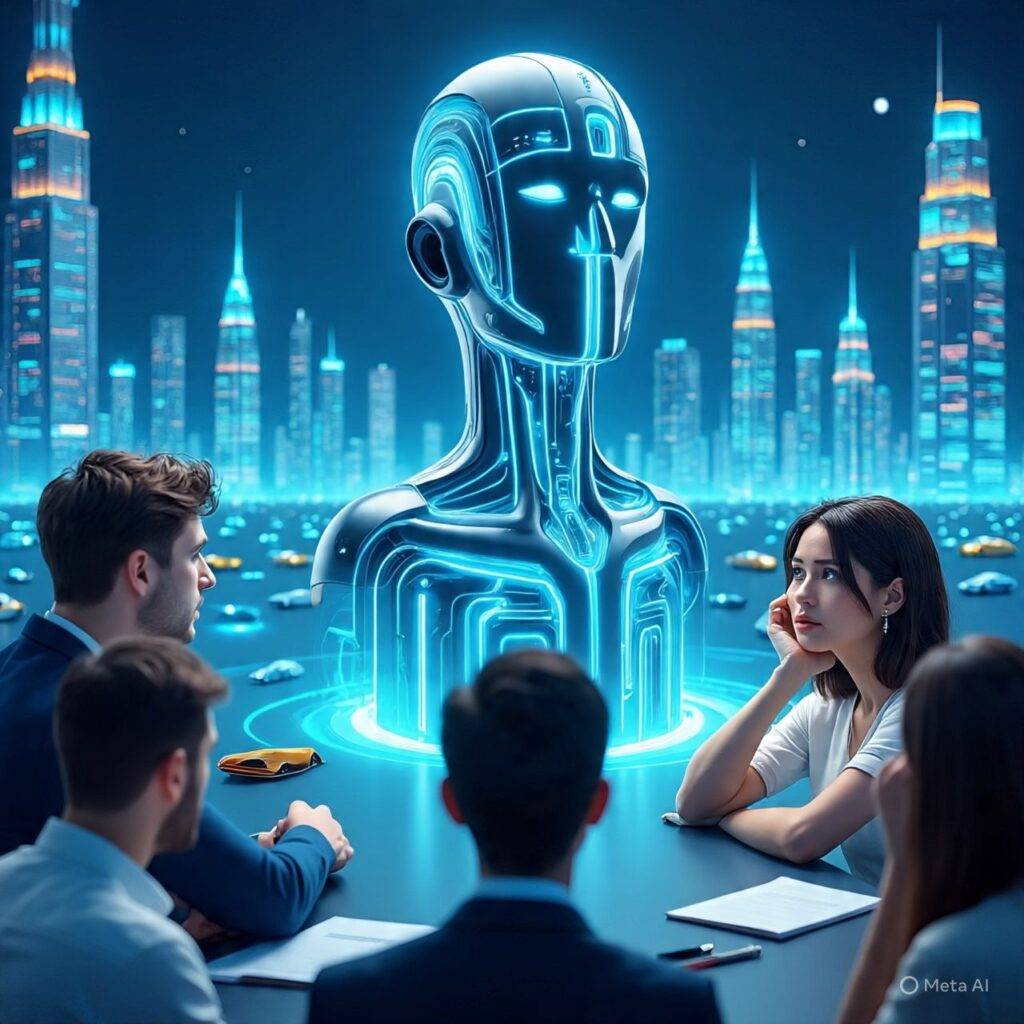
Machines can assist, accelerate, and even outperform us in certain decisions. But they cannot feel the stakes of those decisions. That gap — between knowledge and wisdom, between data and dignity — is where humanity still holds the edge.
The Future Needs Us — and Our Ethics!! (Ai Ethics and us)
As we march into a future shaped by intelligent machines, one thing is clear: our morals cannot be an afterthought. We must lead with them. The choices we make today — about how AI is developed, deployed, and governed — will echo for generations. Because ultimately, AI may be smart, but only we can be wise.
In a world of perfect algorithms, let our imperfect conscience be the guide.
As artificial intelligence becomes more integrated into our daily lives, a pressing question arises: will the future need our morals? From self-driving cars to AI-powered diagnostics and even automated hiring systems, machines are now making decisions once reserved for humans. But can they make the right decisions — the ones grounded in empathy, fairness, and ethics?
AI systems are only as good as the data and intentions behind them. When trained on biased or incomplete data, they can reinforce existing inequalities — denying jobs, misdiagnosing patients, or unfairly flagging individuals. In such scenarios, the absence of human judgment can have real-world consequences.
This is where the importance of ethical oversight becomes clear. Medicine, law, education — all are fields built on trust and moral responsibility. An AI may calculate faster, but it doesn’t understand dignity, context, or compassion. We must ensure that as we hand over tasks to machines, we do not also hand over our humanity.
For medical students and young professionals, this ethical lens becomes even more vital. Tomorrow’s doctors won’t just treat patients — they’ll be working alongside AI systems in diagnostics, robotics, and record-keeping. It’s essential to question and shape how these tools are designed and used.
The future doesn’t just need more technology — it needs more ethical leaders. Leaders who can balance innovation with integrity, efficiency with empathy.
As NEST continues to encourage leadership and critical thinking among students, we urge all future professionals to not only embrace technology but to lead its evolution — responsibly, ethically, and humanely.
After all, machines may drive our future, but it’s our morals that must steer the wheel.
